01
Shingle
Field + flashing
Review displaced, lifted or damaged material alongside edges, valleys, penetrations and the condition around the affected area.
Storm damage roof restoration · Florida
Your home. Your next step. A coordinated plan.
When the roof has changed and the questions keep coming, start with a calm assessment. GreenReady helps connect the damage, the roof and any existing solar to the work your home needs.
A practical starting point
GreenReady helps Southwest Florida homeowners evaluate storm-related roof concerns and plan the work their property needs. The process connects visible damage, roof condition, safe access and any existing solar system to a written repair or replacement proposal. Inspection findings, project approvals and applicable warranty terms guide the restoration plan; insurance coverage is determined separately under the policy.
01 / Your recovery journey
Explore the stages to see your next move, GreenReady’s role and the records to keep. This is a planning guide; it does not track an active project.
RECOVERY GUIDE / 01
Follow local emergency directions. Keep away from unstable roof areas, damaged ceilings, fallen lines and wet electrical equipment. Do not enter a damaged building until it is safe to do so.
Talk through access + availabilityDescribe any immediate concern from a safe location. For immediate danger, call 911 or the appropriate utility.
Discuss inspection availability and whether the property can be accessed safely. Any temporary-protection work needs its own agreed scope.
KEEP THIS RECORDCurrent conditions and any professional temporary-protection records.
RECOVERY GUIDE / 02
Capture the condition from safe locations. A simple record of dates, affected rooms and visible exterior changes makes the next conversation more useful.
Prepare my inspection briefKeep existing photos, repair receipts and a short timeline. Contact your insurer promptly if you intend to pursue a claim.
Use the property history to establish inspection priorities and document the accessible conditions reviewed.
KEEP THIS RECORDPhotos, a symptom timeline, receipts and earlier repair documents.
RECOVERY GUIDE / 03
A storm concern can involve surface materials, flashing, drainage, decking indications and existing solar attachments. Evaluation should distinguish observations from assumptions.
See what the inspection considersShare prior leaks, roof work and solar information, including anything that changed after the storm.
Explain what was observed, the inspection limits and whether additional access or investigation is needed.
KEEP THIS RECORDInspection findings, photos where available and unresolved questions.
RECOVERY GUIDE / 04
A localized repair may be practical, or wider damage may call for a replacement discussion. Material condition, access and applicable requirements shape that choice.
Understand the repair decisionReview the proposed work, price, exclusions and approval points. Clarify how the contracting scope relates to any separate insurance decision.
Define roofing work, any solar coordination, required project approvals and scheduling factors in the proposal.
KEEP THIS RECORDThe signed scope, selected products and applicable written warranty terms.
RECOVERY GUIDE / 05
The approved scope guides the work sequence, material delivery, roof access and any solar handoffs. Closeout should make the completed work and support path clear.
Review warranty responsibilitiesKeep your contract and completion records together. Use the designated contact path if a concern appears after the work.
Coordinate the contracted work and provide the applicable project documentation, inspection records and product information.
KEEP THIS RECORDCompletion information, applicable permit records, warranties and service contacts.
If there is immediate danger, call 911.Use the appropriate utility for fallen lines or an electrical hazard. Inspection scheduling is not an emergency-response service.
CDC · After-storm safety02 / The roof still matters
Storm damage can affect materials and their connections in different ways. The inspection should account for the assembly and the condition around the visible concern.
Field + flashing
Review displaced, lifted or damaged material alongside edges, valleys, penetrations and the condition around the affected area.
Tile + layers beneath
Consider broken or displaced tile together with underlayment, flashing, matching materials and repair access.
Panels + junctions
Assess panel condition, seams, fastening details, penetrations and transitions where movement or damage may affect the assembly.
Membrane + drainage
Review seams, curbs, edges, penetrations and drainage, including evidence of debris impacts or changed water movement.
03 / A decision grounded in the findings
The presence of storm damage does not establish one automatic scope. Ask how the recommendation follows from the roof’s condition and the work required.
The affected area is accessible, surrounding materials are serviceable and a compatible repair can be identified.
Explore Roof RepairDamage spans several areas, material condition limits a lasting repair or connected work expands the scope.
Explore Roof ReplacementRoof area and material, concealed conditions, safe access, available products, solar coordination, weather and applicable project approvals. The written proposal defines the price, scope and exclusions.
A connected roof + solar plan
Rooftop equipment adds questions about access, attachments and system condition. Bring the roof findings and solar information into the same planning conversation.
Any detach-and-reset work, equipment diagnostics or electrical repairs should be identified separately in the proposed scope.
Add solar to my inspection brief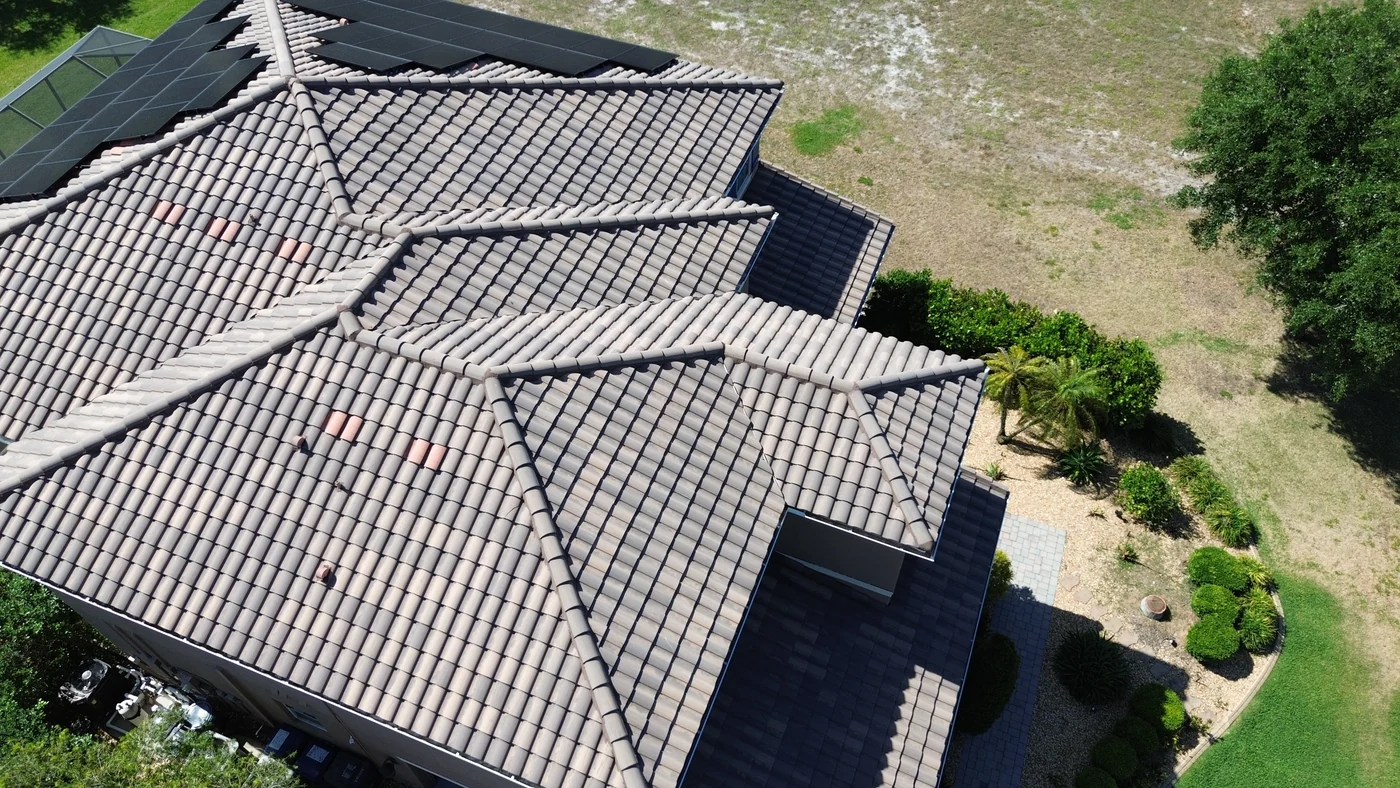
04 / Prepare for your first conversation
Add the details you know and mark the records already available. Copy your brief to share when you contact GreenReady.
Clear roles build confidence
Keep the contractor’s findings, your insurance decision and warranty eligibility distinct. Each answers a different question.
| Your question | Where the answer comes from |
|---|---|
| What work does the roof need? | Inspection findings and the proposed contracting scope from GreenReady. |
| What will insurance pay? | Your insurer’s determination under the policy, including applicable deductibles and exclusions. |
| Does a product warranty apply? | The manufacturer’s actual warranty document and the project’s eligibility. |
| What work does GreenReady warrant? | The limited workmanship terms for the work included in the written project agreement. |
Florida’s consumer guide explains documentation, contractor selection and the claim process. Review it alongside your policy and project records.
Florida DFS · Disaster assistance guideGreenReady, LLC · Published Florida credentialsRoofing CCC1335977 · Building CBC1267098 · Electrical EC13008201
The GreenReady Guarantee
Keep the actual product documents and contracted workmanship terms with your restoration records. The scope and eligibility determine what applies.
Material defects, any wind provisions, registration, labor allowances and exclusions vary by product and warranty. A manufacturer warranty is different from your property insurance policy.
GAF · Warranty comparisonAny GreenReady limited workmanship warranty applies to the contracted scope under the project’s written terms. Confirm the duration, exclusions and service-request process before authorizing work.
Explore the GreenReady GuaranteeStorm recovery questions
Practical guidance for homeowners in Sarasota, Manatee County, Lakewood Ranch, Tampa Bay and Southwest Florida.
Ask GreenReadyPut safety first and follow local emergency directions. Keep clear of unstable areas, damaged ceilings, fallen power lines and wet electrical equipment. From a safe location, note what changed and contact GreenReady to discuss inspection availability. Call 911 for immediate danger. If pursuing an insurance claim, contact your insurer promptly.
Storm Damage Restoration is listed among GreenReady’s roofing services. This page serves homeowners in Sarasota, Manatee County, Lakewood Ranch, Tampa Bay and Southwest Florida. The specific address, safe access, available scheduling and project scope are confirmed during intake.
Photos help document visible conditions, but they do not reveal every layer or confirm the full scope. An on-site review considers the damage, surrounding material condition, roof assembly, access and applicable project requirements before recommending a repair or replacement discussion.
GreenReady can evaluate roofing and solar-interface concerns together within the proposed scope. Include any visible attachment concerns, changed monitoring status or prior system records. Panel removal depends on access and the work required; an offline solar system needs its own electrical and equipment evaluation.
No emergency response time or universal tarping service is promised by this page. Tell GreenReady about active water intrusion and ask what evaluation or temporary-protection options are available for the specific property. Weather, safe access, staffing and conditions affect availability. Use emergency services for immediate danger.
Coverage, deductibles and payment are determined under your policy by the insurer. GreenReady can explain observed conditions and the proposed contracting scope. An inspection or estimate is not a claim approval or a promise that insurance will fund the work.
Keep photos taken from safe locations, dates, descriptions of changes, earlier roof records and any temporary-work receipts. Add relevant solar documents if panels are present. Preserve original files and share the records requested by your contractor or insurer through their designated contact process.
The affected area, roof system, concealed conditions, matching materials, safe access, solar coordination, permit requirements and material availability all matter. Weather and scheduling capacity also influence timing. Your written proposal should identify the contracted scope, price, exclusions and the factors that could change the plan.
Manufacturer coverage depends on the exact product and written warranty. A material-defect warranty is different from a storm insurance policy; some product warranties include specific wind provisions with limits and eligibility conditions. Ask for the applicable document rather than assuming all storm damage or labor is covered.
Any GreenReady limited workmanship warranty applies to the contracted work under its written project terms. Confirm the covered scope, duration, exclusions and service-request process before authorizing the work. A new repair does not automatically create coverage for unrelated conditions, an entire existing roof or another installer’s solar work.
Resource links reviewed September 6, 2026. Linked organizations do not endorse GreenReady. Conditions, available scheduling and the final scope are confirmed for your property.
Start with a conversation
Tell us what changed after the storm. Bring what you know, ask what comes next and build the plan around your property.
Request a Storm Damage EvaluationEvaluation availability and any temporary-protection options are confirmed during intake. Immediate hazards require emergency or utility assistance.